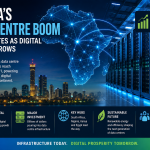
Nigeria is increasingly asserting itself as a major digital force in West Africa, with the Federal Government now seeking to make the country’s growing technological influence a more prominent part of its foreign policy.The Minister of Communications, Innovation and Digital Economy, Dr Bosun Tijani, made this known on Tuesday in Abuja while speaking at the Second Seminar on Anticipatory, Cyber and Digital Diplomacy organised by the Ministry of Foreign Affairs.The seminar, themed “From Awareness to Activation: Operationalising AI, Cyber and Digital Statecraft for Nigeria’s Foreign Policy,” brought together policymakers, diplomats and technology professionals to examine how emerging technologies are changing international relations.Digital strength is becoming a measure of national influenceTijani argued that a country’s influence can no longer be judged only by its population, economic size or military capabilities.According to him, digital infrastructure, technological capacity and cybersecurity are becoming increasingly important sources of national power.He said Nigeria has several strategic advantages that place it in a strong position to lead digital development in the region.Among them, he highlighted Nigeria’s communications satellites and its extensive network of subsea internet cables, which he said give the country an important position within West Africa’s digital infrastructure ecosystem.The minister also described Nigeria as a growing data hub for the region, making the country increasingly significant to international technology companies and neighbouring economies.Government strengthens cybersecurity frameworkAs Nigeria’s digital footprint expands, the government is also working to strengthen the protection of critical digital infrastructure.Tijani disclosed that a new Ministerial Advisory Council on Cybersecurity is being established to improve cooperation between government and private-sector stakeholders and facilitate the sharing of intelligence on emerging cyber threats.He said the government is adopting a resilience-focused approach to safeguarding strategic infrastructure, including subsea cables, fibre-optic networks and satellites.The objective, he explained, is not only to prevent cyber incidents but also to ensure that critical systems can withstand disruptions and recover quickly when attacks or failures occur.Nigeria advances its artificial intelligence agendaArtificial intelligence was another major focus of the minister’s presentation.Tijani said Nigeria has made progress in developing policies designed to encourage AI innovation while ensuring that emerging technologies reflect the country’s national interests and values.He also said Nigeria recently received recognition as Africa’s top-ranked country for responsible AI in an assessment by a research group associated with the University of Cambridge.Another development highlighted by the minister was the creation of a government-backed large language model designed to understand Yoruba, Hausa, Igbo, Ibibio and accented English.He stressed that AI systems designed for Nigerians should be capable of understanding the languages and cultural realities of the people they are intended to serve.National AI Trust receives approvalTijani further disclosed that the Federal Executive Council has approved the establishment of a National AI Trust, which is expected to support investment and governance in the artificial intelligence sector.The initiative is expected to provide a framework for coordinating AI-related investments while addressing issues surrounding responsible development, national interests and governance.Digital skills programme reaches more young NigeriansThe minister also provided an update on the government’s digital-skills development efforts.He said the Three Million Technical Talent (3MTT) programme has trained almost 300,000 young Nigerians across local government areas.Some of the beneficiaries, he added, are already being connected to employment opportunities with support from development partners, including the United Nations Development Programme and the European Union.The programme forms part of the government’s broader effort to build a workforce capable of participating in Nigeria’s expanding digital economy.Foreign Ministry establishes AI and Cyber Diplomacy UnitSpeaking earlier, the Minister of State for Foreign Affairs, Ambassador Sola Enikanolaiye, said technological developments were rapidly changing diplomacy and global governance.He disclosed that the Ministry of Foreign Affairs had established an Artificial Intelligence and Cyber Diplomacy Unit following the inaugural edition of the seminar.The unit is expected to coordinate Nigeria’s engagement on emerging technologies and help strengthen the country’s diplomatic response to developments in cyberspace and artificial intelligence.Enikanolaiye called for stronger collaboration between government, academia, technology professionals and international partners.He also emphasised the importance of training diplomats to operate effectively in an increasingly technology-driven international environment.From awareness to implementationThe Chair of the African Union Cybersecurity Experts Group and lead facilitator of the seminar, Abdul Hakeem Ajijola, said the programme is designed to help Nigeria anticipate technological changes rather than simply react to them.He explained that anticipatory diplomacy involves preparing for developments before they become major challenges, while cyber diplomacy deals with relations among states in cyberspace.Digital diplomacy, he added, involves using digital technologies and platforms to advance Nigeria’s interests internationally.Ajijola noted that while the first seminar in 2025 concentrated largely on creating awareness, this year’s programme is focused on turning that awareness into practical action and implementation.Positioning Nigeria for the digital futureThe discussions in Abuja highlight the growing connection between technology and national diplomacy.As Nigeria expands its digital infrastructure, AI capabilities, cybersecurity systems and technical workforce, the government believes these assets can strengthen not only economic development but also the country’s influence in regional and global affairs.The challenge ahead will be converting these digital advantages into sustainable economic opportunities, stronger institutions and greater international influence while ensuring that Nigeria’s technological growth remains secure, inclusive and aligned with national interests.



Show Comments (0)
Hide Comments (0)