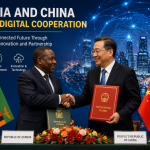
Africa’s digital economy is entering a transformative phase as businesses and governments increasingly adopt alternative payment systems, including yuan-based settlements and digital currencies, to power cross-border trade and financial inclusion.
Recent developments involving Ecobank and Bank of China highlight a growing shift toward settling transactions in Chinese yuan. The move is designed to reduce reliance on the US dollar, lower transaction costs, and improve payment efficiency for African businesses trading with China—one of the continent’s largest economic partners.
Industry analysts say this trend reflects a broader evolution in Africa’s financial landscape, where traditional banking systems are being complemented by faster, technology-driven alternatives.
Digital currencies are also gaining traction. Several African central banks are exploring or piloting central bank digital currencies (CBDCs), while private sector innovations in blockchain-based payments continue to expand access to financial services. These solutions are particularly impactful for small and medium-sized enterprises (SMEs), which often face high fees and delays when using conventional international payment channels.
Experts note that alternative payment systems could significantly reshape Africa’s trade ecosystem by enabling:
- Faster and cheaper cross-border transactions
- Reduced exposure to foreign exchange volatility
- Greater financial inclusion for underserved populations
However, challenges remain. Regulatory uncertainty, infrastructure gaps, and concerns around cybersecurity continue to slow widespread adoption. Policymakers are now under pressure to strike a balance between encouraging innovation and ensuring financial stability.
Despite these hurdles, momentum is clearly building. As Africa deepens its trade relationships globally and strengthens intra-African commerce, alternative payment systems are expected to play a central role in unlocking the next wave of digital economic growth.
In the coming years, the success of these systems may well determine how competitively Africa positions itself in an increasingly digital and multi-currency global economy.