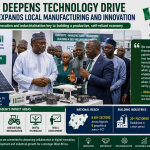
The National Information Technology Development Agency (NITDA) has expressed its readiness to deepen collaboration with Yakubu Gowon University, Abuja (formerly University of Abuja) to strengthen technology research, innovation and the development of solutions to Nigeria’s local challenges.
The partnership was discussed when the university’s Vice-Chancellor, Professor Hakeem Fawehinmi, led a delegation on a familiarisation visit to NITDA’s headquarters in Abuja. NITDA Director-General, Kashifu Inuwa Abdullahi, reaffirmed the agency’s commitment to working with the institution and other Nigerian universities to advance technology-driven research.
According to NITDA, stronger collaboration between government technology agencies and universities is essential to connecting academic research with the needs of the Nigerian economy. The initiative is expected to encourage researchers and students to develop practical digital solutions capable of addressing challenges across different sectors.
The agency also emphasised the importance of building an innovation ecosystem that equips young Nigerians with relevant practical and technical skills. Such collaboration could help strengthen the pipeline of technology talent while creating opportunities for researchers to transform academic ideas into scalable innovations.
The partnership comes at a time when Nigeria is increasingly focusing on research, artificial intelligence, digital transformation and innovation as drivers of economic development.
Yakubu Gowon University is also expected to play a role in the country’s emerging research and innovation landscape. In July, the Federal Government announced plans for the Nigeria Genomic City, which will be hosted by the university, with NITDA and other partners providing technology and innovation support. The project is intended to advance scientific research, biotechnology and precision medicine while supporting broader economic development.
NITDA’s collaboration with universities therefore represents an important step toward creating stronger links between academia, government and industry. By encouraging research that responds directly to real-world problems, Nigeria can increase its capacity to develop homegrown technologies and strengthen its position within Africa’s growing digital economy.
The partnership is expected to contribute to a more innovation-driven ecosystem where research, technology and talent development can translate into practical solutions, new businesses and inclusive economic opportunities.