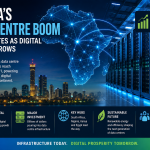
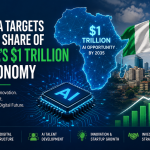
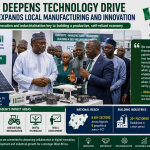
Nigeria’s telecommunications industry reinforced its position as a major driver of economic growth during the first half of 2026, recording significant milestones in digital infrastructure, artificial intelligence, broadband expansion and regulatory reforms.Despite facing rising operating costs, security concerns and increasing demand for quality connectivity, the sector remained resilient and continued to support businesses, government services and millions of digital users across the country.According to data from the National Bureau of Statistics (NBS), telecommunications contributed 9.19 percent—equivalent to ₦4.71 trillion—to Nigeria’s real Gross Domestic Product (GDP) in the first quarter of 2026. This performance ranked the industry among the country’s leading non-oil sectors and underscored its growing importance in driving economic diversification.Industry experts say the sector’s continued expansion has strengthened critical areas of the economy, including banking, fintech, e-commerce, education, healthcare and digital public services.Another major highlight of the period was the sharp rise in internet usage. Statistics released by the Nigerian Communications Commission (NCC) showed that data consumption exceeded four billion gigabytes within the first six months of the year, reflecting the increasing reliance on online learning, digital payments, video streaming, remote work and other internet-based services.However, the surge in data usage also generated widespread consumer concerns over faster data depletion, prompting mobile operators to review consumption patterns and improve transparency for subscribers.In a landmark policy move, the Federal Government launched the National Shared AI Compute Infrastructure through the Federal Ministry of Communications, Innovation and Digital Economy. The initiative is designed to provide researchers, startups, universities and public institutions with access to high-performance computing resources needed to develop indigenous artificial intelligence solutions.Supported by Galaxy Backbone and the Bill & Melinda Gates Foundation, the infrastructure is expected to accelerate AI research, innovation and digital transformation while reducing the high cost of computing resources.Regulatory oversight also received a boost as the Nigerian Communications Commission (NCC) and the Corporate Affairs Commission (CAC) introduced new guidelines governing ownership changes in telecommunications companies. Under the new framework, any transfer involving 10 percent or more of a telecom company’s shareholding must obtain prior approval from the NCC before registration by the CAC. The policy is intended to enhance transparency, strengthen investor confidence and safeguard competition within the industry.Despite these positive developments, foreign investment in the telecommunications sector declined significantly during the first quarter of 2026. The industry attracted $7.24 million in capital inflows, its lowest level in four years, even as Nigeria’s total capital importation recorded substantial growth during the same period. Analysts attribute the decline to investor caution amid prevailing economic and operational challenges.Meanwhile, broadband expansion remained a key priority as operators accelerated fibre-optic deployment and government agencies continued implementing projects under the National Broadband Plan to improve digital access in underserved communities. The expanded infrastructure is expected to further support digital banking, e-commerce, healthcare, education, entertainment and emerging technologies.With sustained investments, policy reforms and collaboration between government and industry stakeholders, Nigeria’s telecommunications sector is expected to remain a cornerstone of the country’s digital transformation and play a vital role in achieving its long-term economic development goals.


Show Comments (0)
Hide Comments (0)